The Pros and Cons of Virtual Museums

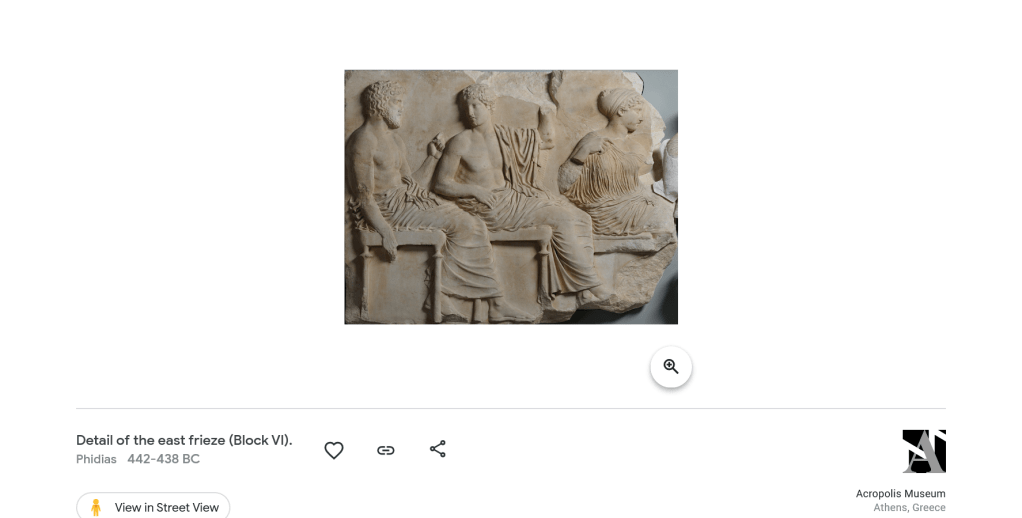
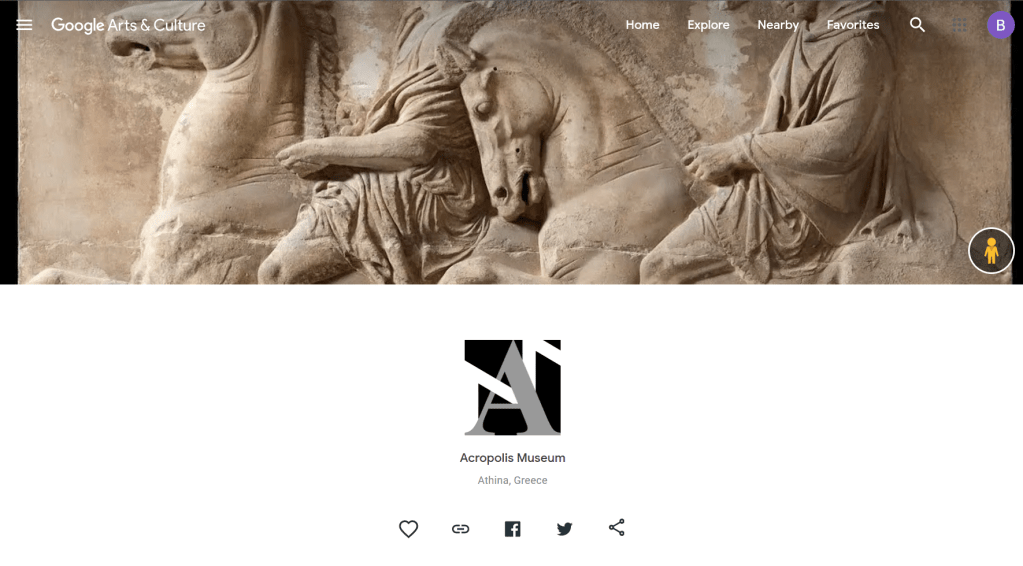
Screenshot of the Google Arts and Culture virtual tour of the Acropolis Museum

I think nearly everyone would agree with the fact that 2020 as been a rough year even though it is only April. Activities have been suspended, schools canceled, relationships upended, lifestyles changed: this year has been tough for everyone. Personally, the measures that have been taken to stop the spread of Covid-19, while extremely important and helpful for all, have really impacted by senior year of college. More specifically, they have prevented me from going to Greece and Italy this summer on a graduation trip that we have been planning for four years. Despite losing my graduation ceremony, missing my teachers, not being able to say goodbye to my friends, not being able to see my boyfriend, and having to stay home for weeks on end, one of my biggest disappointments has to be not being able to see the Acropolis Museum in Athens, Greece.

Anyone that knows me knows that I would do just about anything to learn more about ancient Greek and Roman culture. I talk about it constantly and would love nothing more than to be a historian in Pompeii or in Athens. When I learned that our trip had been canceled, I was completely beside myself. However, thanks to my Bears Make History teachers, I soon learned that Google is sponsoring free virtual tours of museums all around the world. When I saw that one was the Acropolis Museum, I knew that I had to check it out.
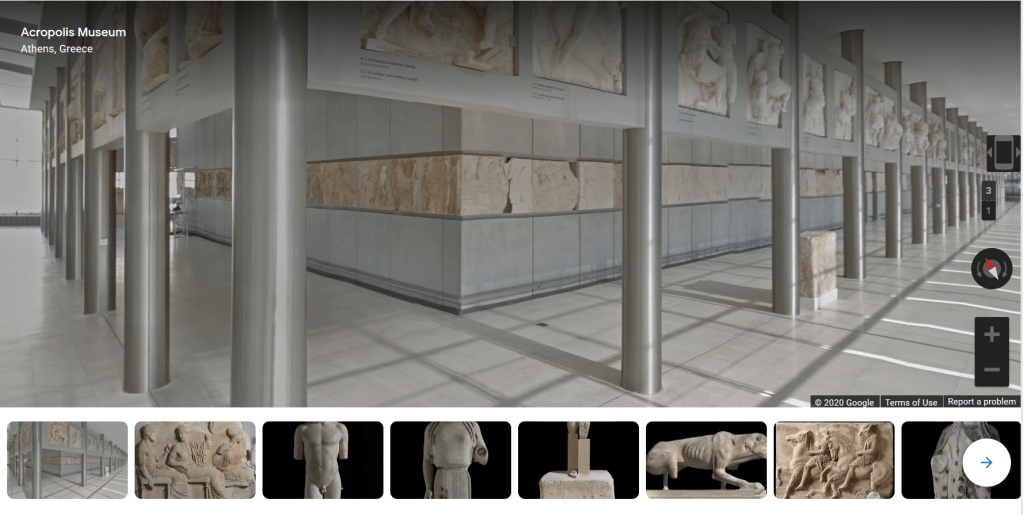
Screenshot of the opening tour page for the Acropolis Museum digital tour.

The virtual tour, which is linked at the bottom of this post, starts by taking you to what I assume is the main floor of the museum. If you click on the top picture, you have the ability to take a 360 degree look at where you are and click around to move yourself down the halls or to take a closer look at the artifacts in the room. When you click the small photos at the bottom, as depicted in the screenshots below, your view switches to the exact location where the particular object is located in the museum. From there, you are able to explore the other exhibits that are in the room with the photographed object. In addition, clicking on the small photos provides you with a link to view the object’s details and zoom in on the object.
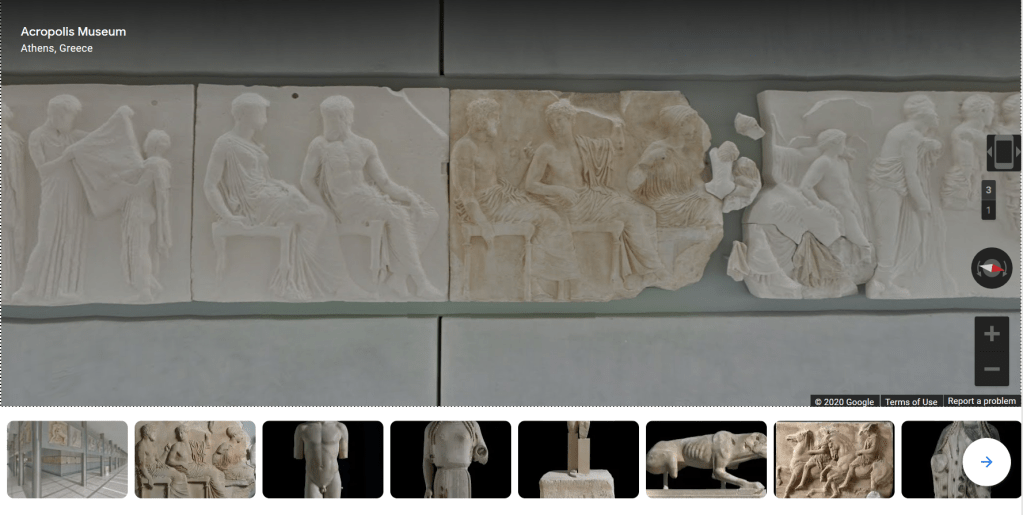
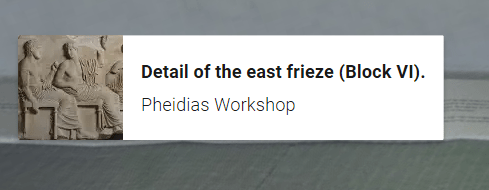
While these features do help the museum come to life virtually, there are a few setbacks. While people are able to take closer looks at objects and read object descriptions when visiting museums in person, this format only allows you to gain background information on certain objects. Similarly, there are some cases where the user is not able to get close to particular objects or parts of the room. Since the photographs are digital and the 360 degree experience is virtual, the images and process of going through the museum are not as crisp, clear, or smooth as when you go to a museum in person.

Overall, it was very interesting to see the Acropolis Museum in a digital/virtual way. While I may never get to see the museum in person, I think that Google did a really good job of capturing the breathtaking beauty of the exhibits and it was really interesting to be able to read some of the object descriptions. While this experience has proven that a person does not have to leave their home to see art and experience culture, it also makes my heart ache to see the exhibits in person. If anything, this experience makes me want to go to Greece so much more than I originally did. I want to able to look more closely at the exhibits, read the plaques, and take my time simply standing in the space. Even though I miss it more, I am blown away by how Google was able to bring such an amazing place to life and create something good in a time when everything is so terrible. Digital projects like this one have the power to expand our world for the better.

For more information on the virtual tour of the Acropolis Museum, please visit https://artsandculture.google.com/partner/acropolis-museum

For other virtual museum tours sponsored by Google, please visit https://artsandculture.google.com/partner
Museums Reimagined: A Review of the Digital Museum for Hispanic Culture

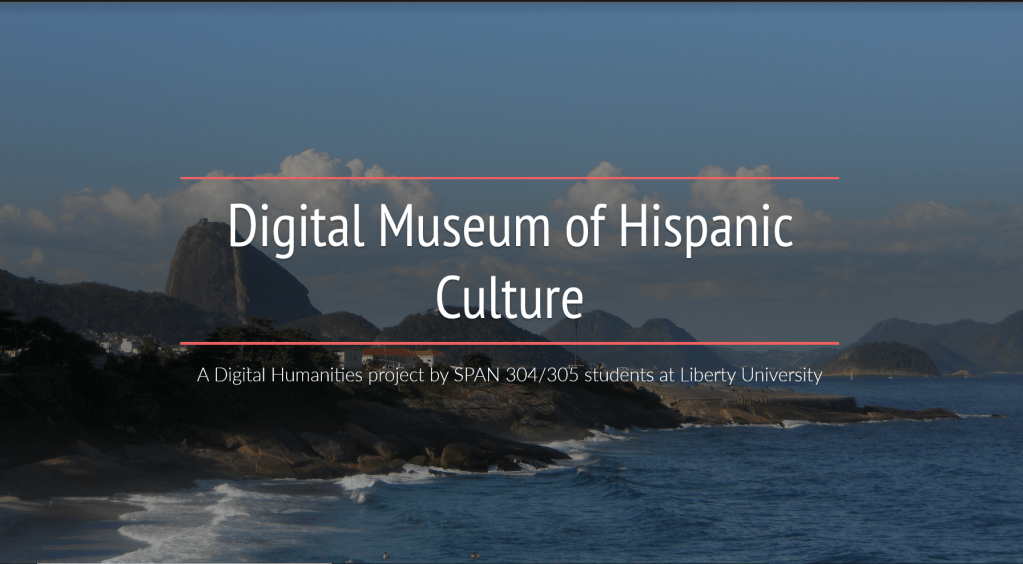
This photo is a screen shot of the homepage for the Digital Museum of Hispanic Culture produced by Liberty University.

Due to the world-wide spread of the Coronavirus and the measures that have been taken to limit its spread, many talks, events, and establishments have been shut down or postponed. While doing so has protected the lives of countless people, it has also cut people off from sharing ideas, culture, and history with one another. However, thanks to digital platforms and increasing amounts of digitized information, it is still possible for people in quarantine to interact with the world around them even though they must do so from the safety of their homes. For example, the creation of digitized museums, like Liberty University’s Digital Museum of Hispanic Culture, allows people to experience culture and history through a digital platform.

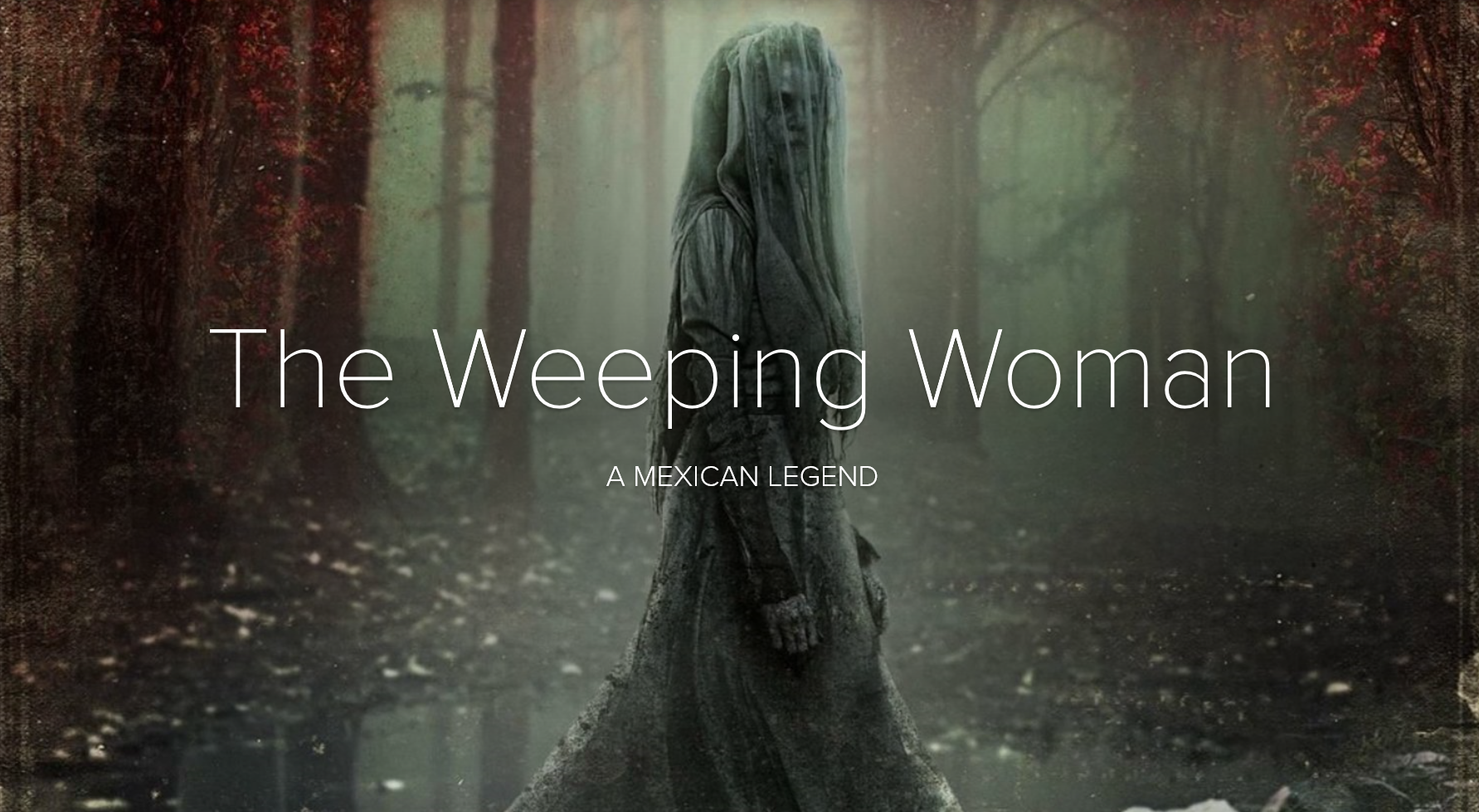
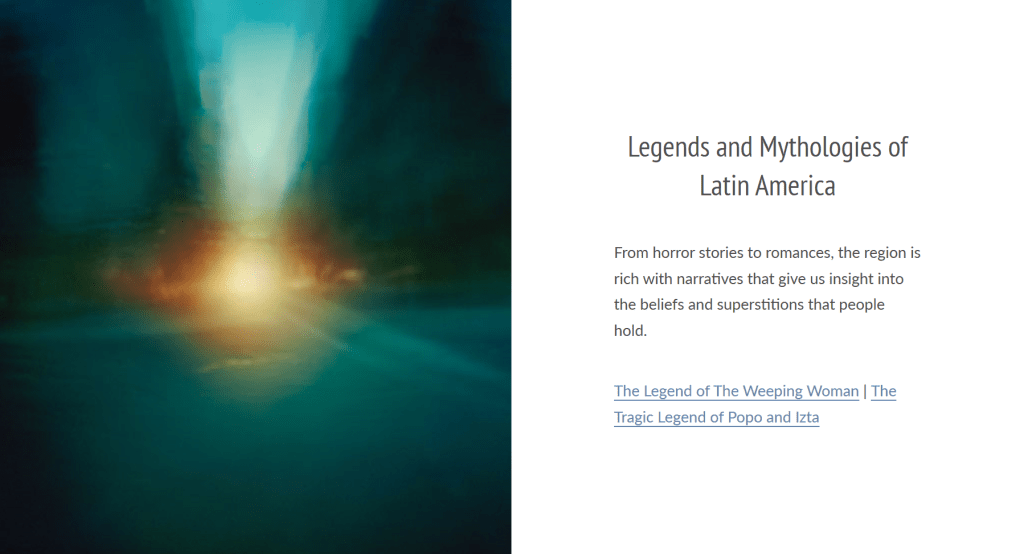
This photo is a screenshot of the Legends and Mythologies section of the Digital Museum of Hispanic Culture’s webpage.

As the name suggests, the Digital Museum of Hispanic Culture is a growing student-produced Sway project that contains mini projects focusing on Hispanic culture. Students from Liberty University have created mini Sway presentations on topics like indigenous Latin American peoples, tourist sites, music, religion, legends, holidays, food, architecture, art, and social issues that are present in Latin American societies. As depicted by the photo above, each of these topics is presented on the project’s homepage with a short description and links to the projects that students have completed that fall under each topic. By clicking on one of the links, the viewer is taken to a mini Sway project that features text, photos, and videos about a specific topic.

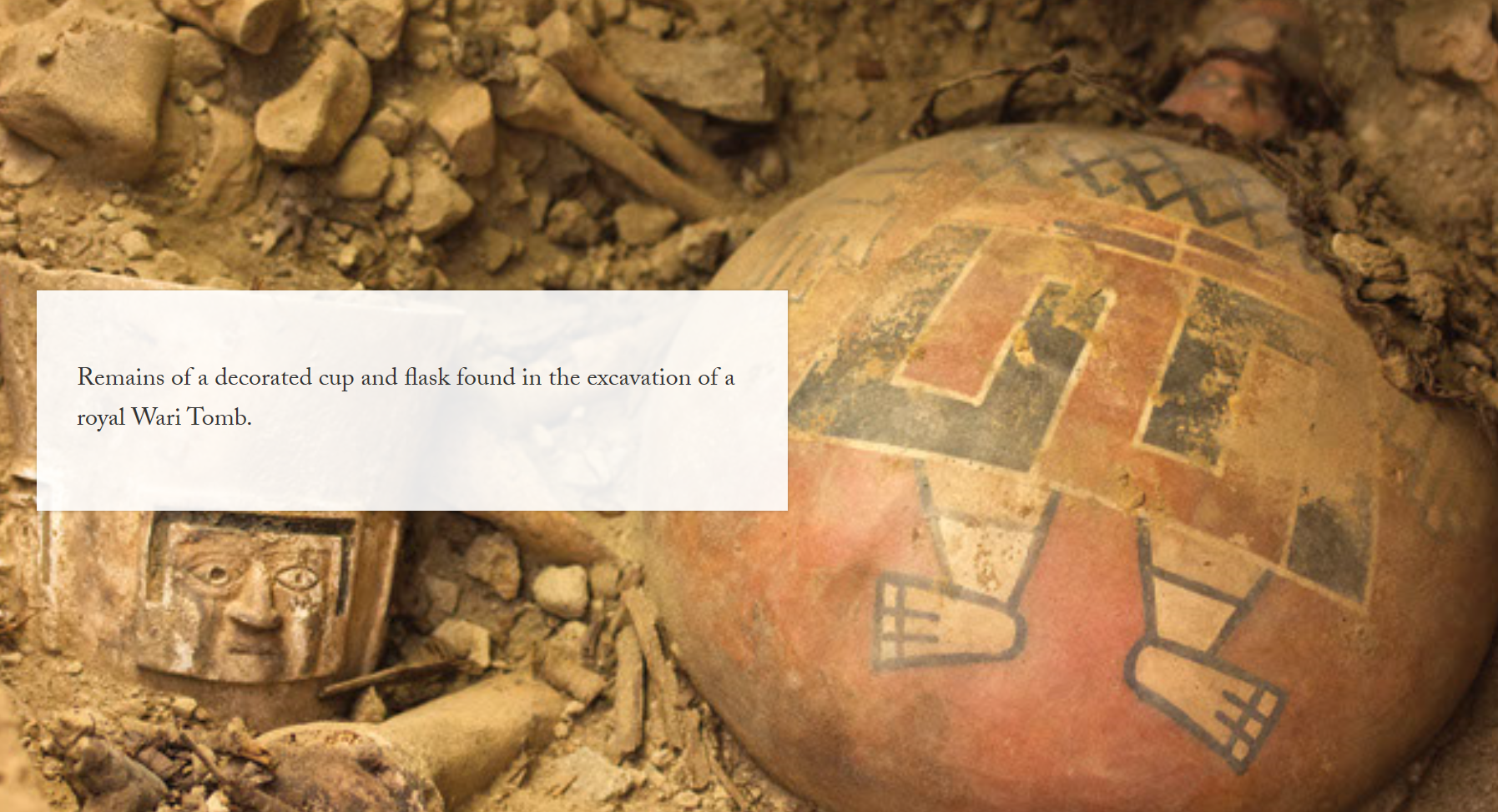
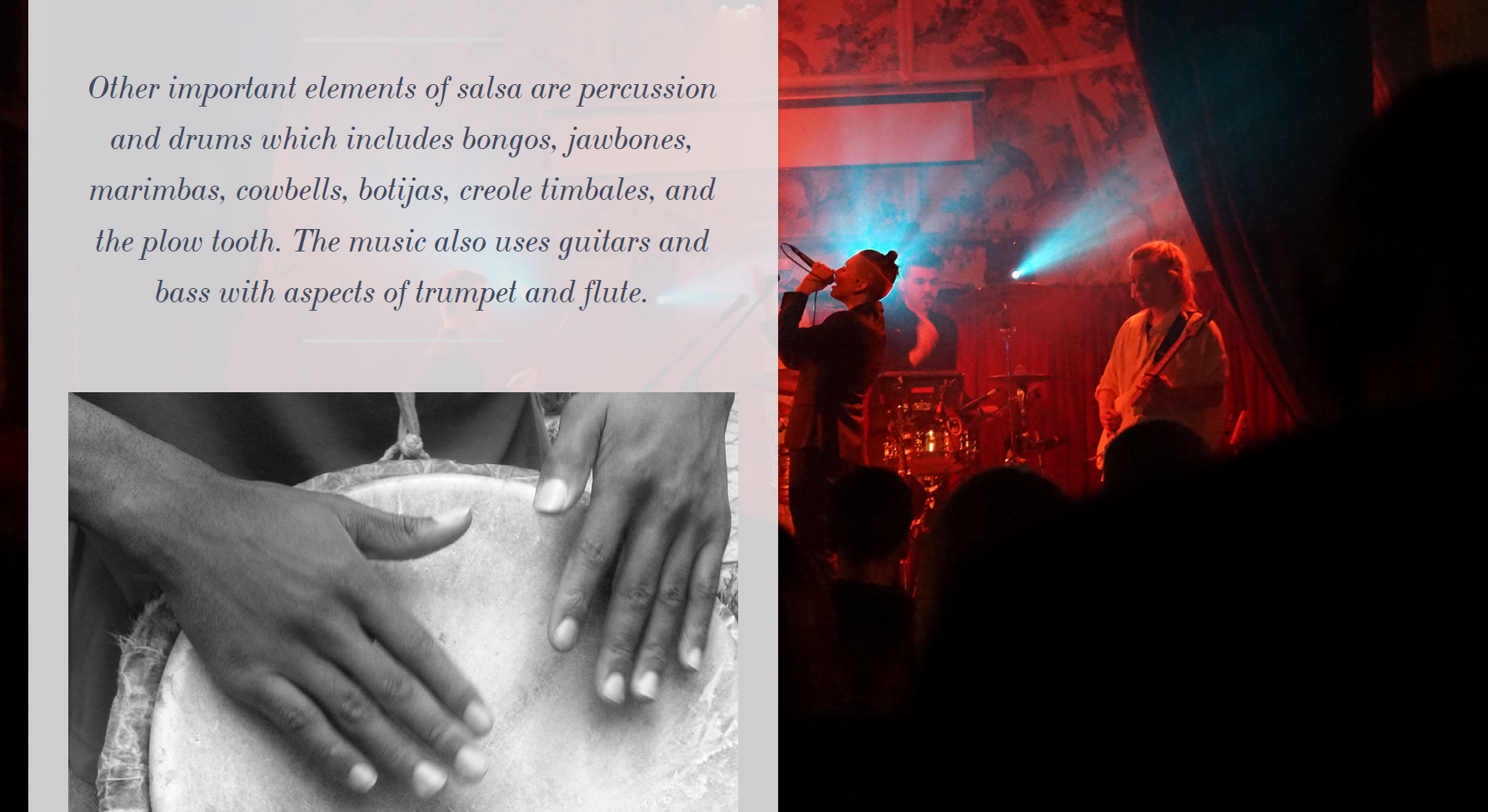
Since all of the projects have been completed by students at different times and regarding different subjects, each one is very unique. As depicted in the slideshow above, each project provides the viewer with an interesting topic, like tres leches cake or the story of the Weeping Woman, vivid photographs, maps, analysis, a short video summary of the topic, and a list of sources that viewers can use to look deeper into a given topic. Since each project is unique, viewers of this digital museum have the opportunity to explore many different aspects of Hispanic culture without having to leave their homes.

Overall, this project has taught me that quarantine does not necessarily mean that people need to be chained to their homes. Through the use of digital platforms and due to the rise of the digitization of information, people are able to virtually leave their homes to get involved in events, go to different places, and see different people. Liberty University’s Digital Museum of Hispanic Culture is a prime example of how digital sources allow people to experience culture and history even when they are confined to one space. We do not have to give up living and experiencing just because we cannot go outside. Digital sources give us more than enough to think about.

To learn more about Liberty University’s Digital Museum of Hispanic Culture, please visit: https://spark.adobe.com/page/76vUwqOYNxnz5/

Review of No More Blue Skies.

Ursinus College, “The Science Building (Pfahler Hall),” Digital History at Ursinus, accessed February 27, 2020, http://omeka.ursinus.edu/items/show/1005.

The Bears Make History class at Ursinus College is notable for all of its amazing projects that depict some part of the institution’s past. By pulling out primary source documents from the college’s archives, students are able to bring a part of history to life on a digital platform. However, what do the projects actually look like?

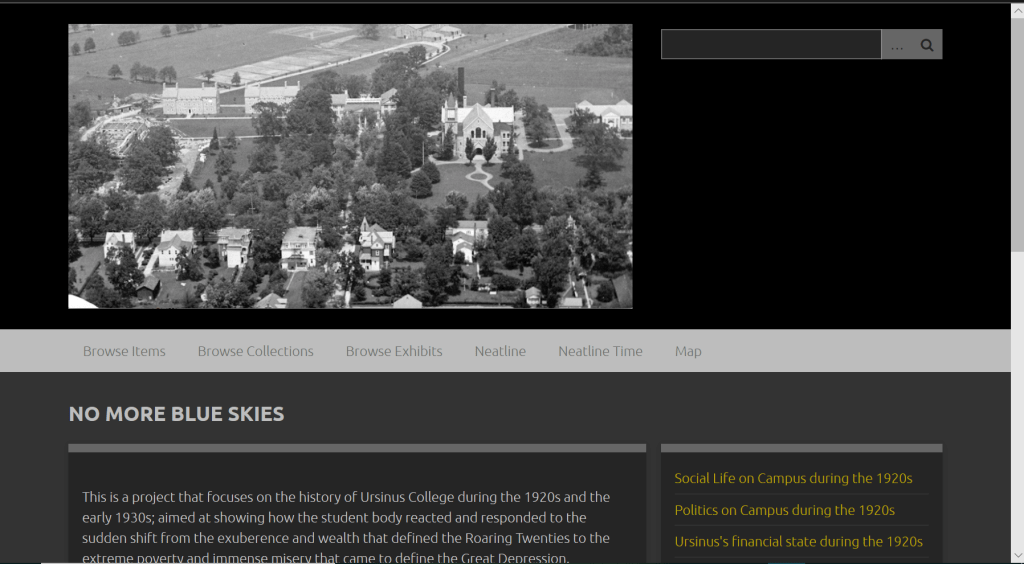
Screenshot of the No More Blue Skies project homepage.

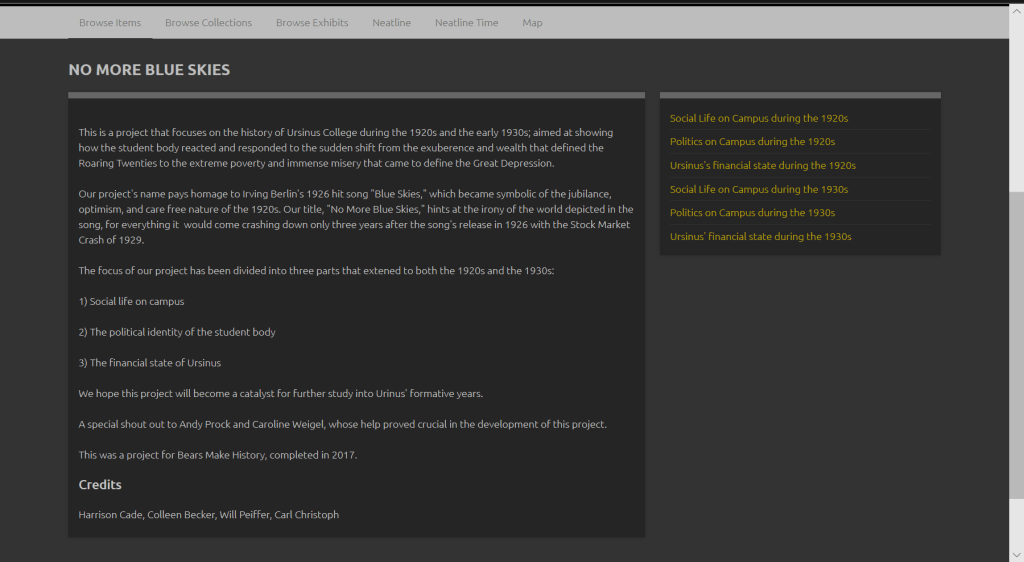
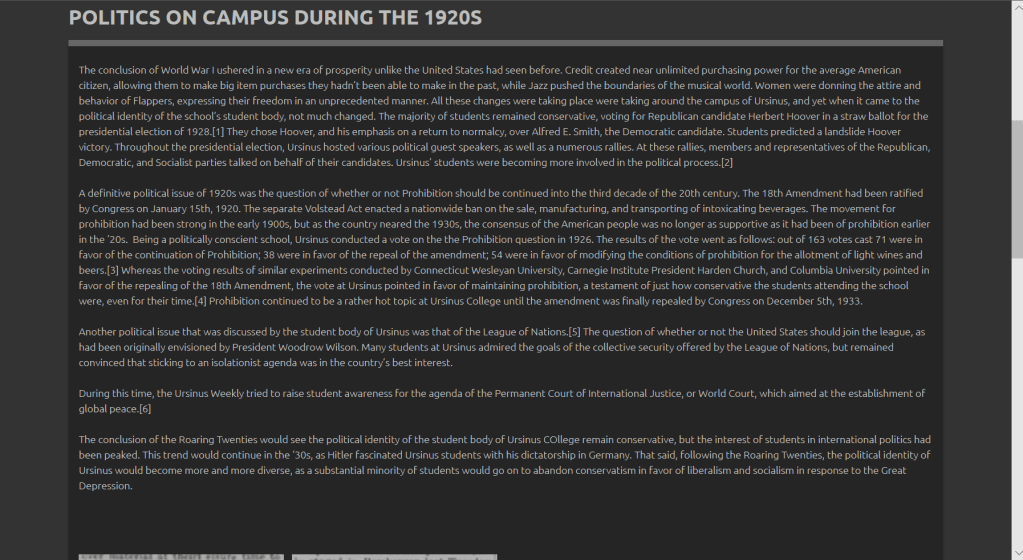
Let’s take, for example, the No More Blue Skies project, which tracks the social changes on the college’s campus between the 1920s and 1930s. Upon first glance, the project seems very easy to navigate and is astatically pleasing. The homepage opens up first and foremost with an older picture of the Ursinus campus, which automatically makes viewers aware of the fact that the project will be focusing on the more distant past. The main idea of the project is summarized in two short paragraphs, which are easy to follow and read, and the specific areas they will be looking into. Those specific areas are also displayed on the right side of the screen, which makes it easy to navigate the project as a whole. The one aspect of the project homepage that could be changed is the color scheme. The light gray bar at the top of the page with the slightly darker gray text is hard to read and may make the project less accessible to viewers.

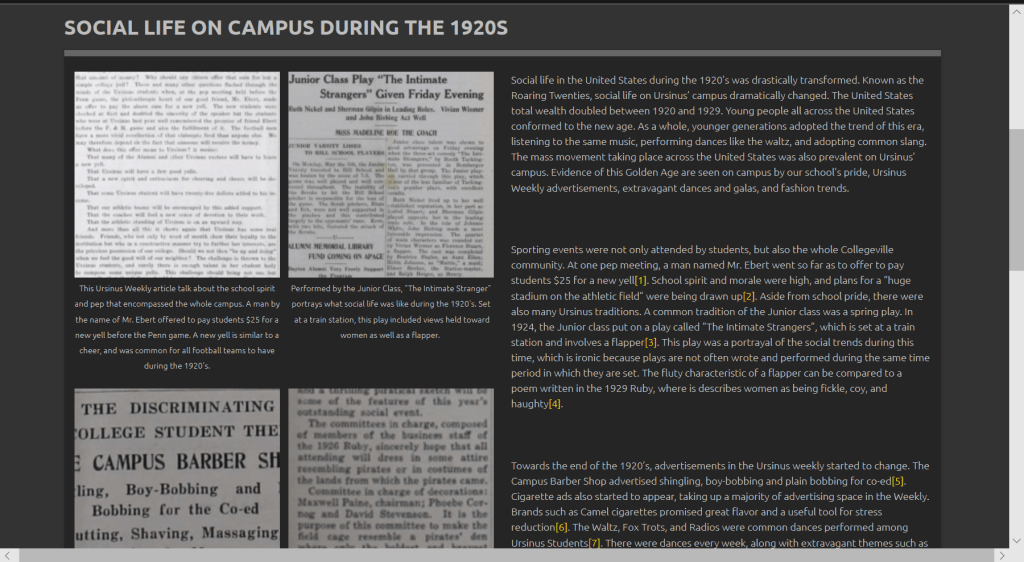
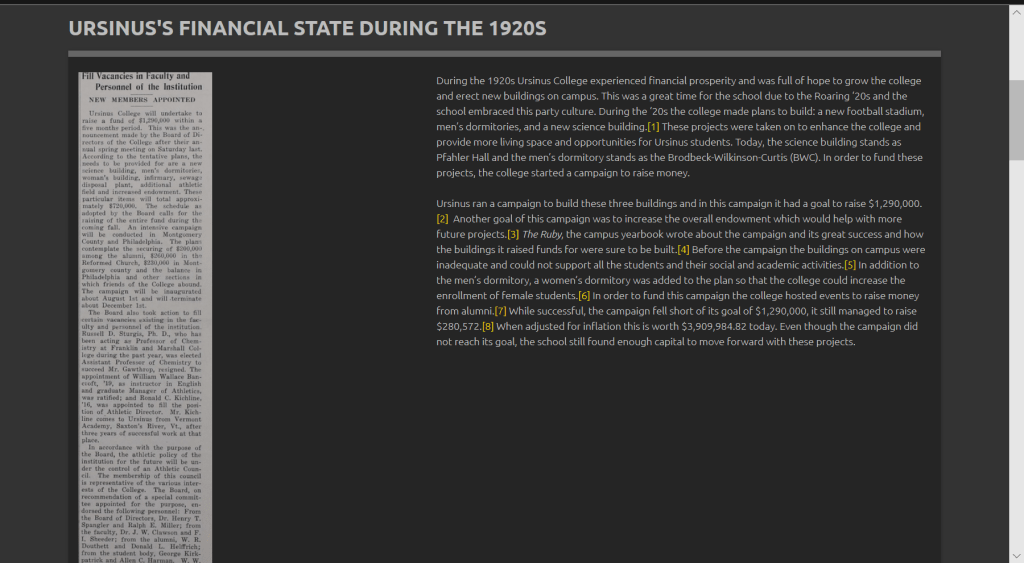
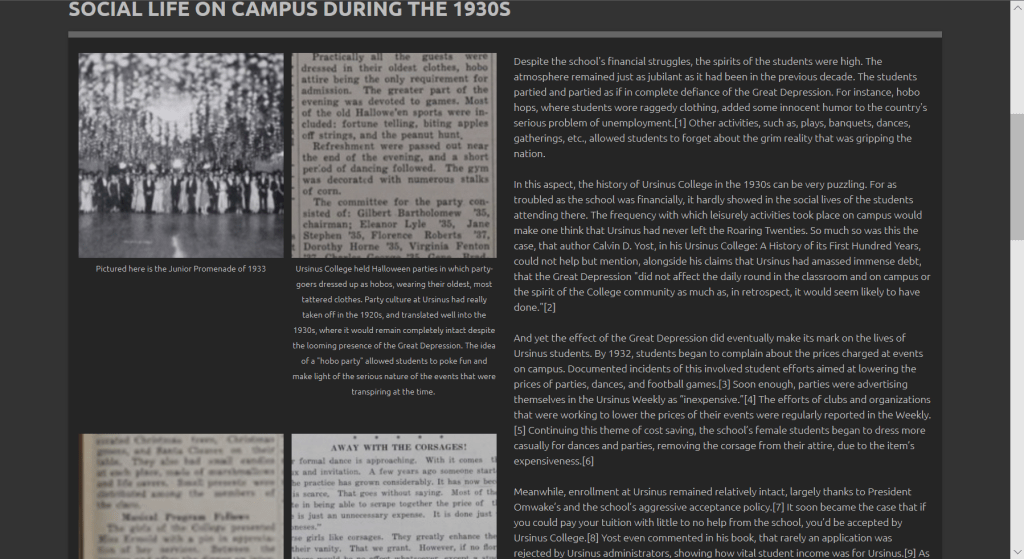
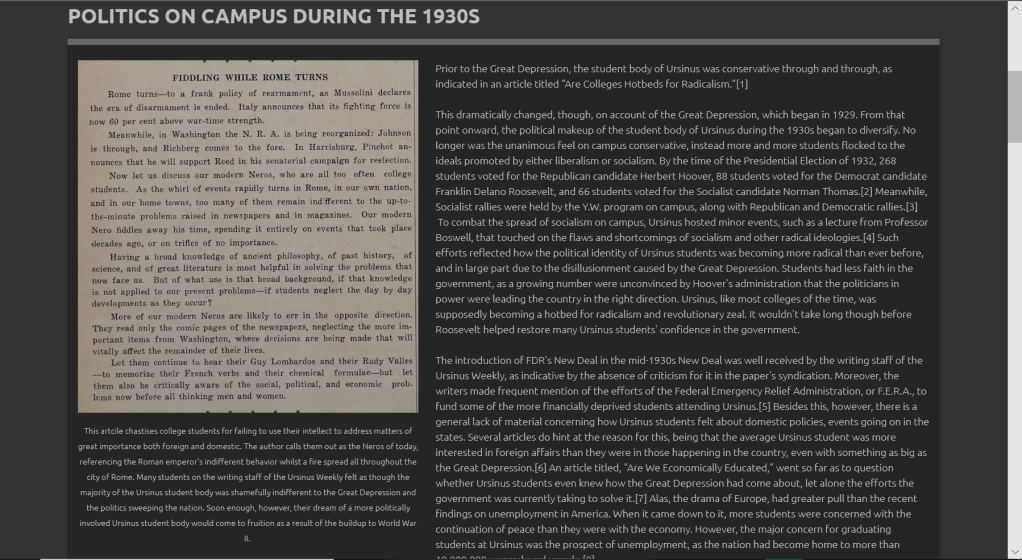
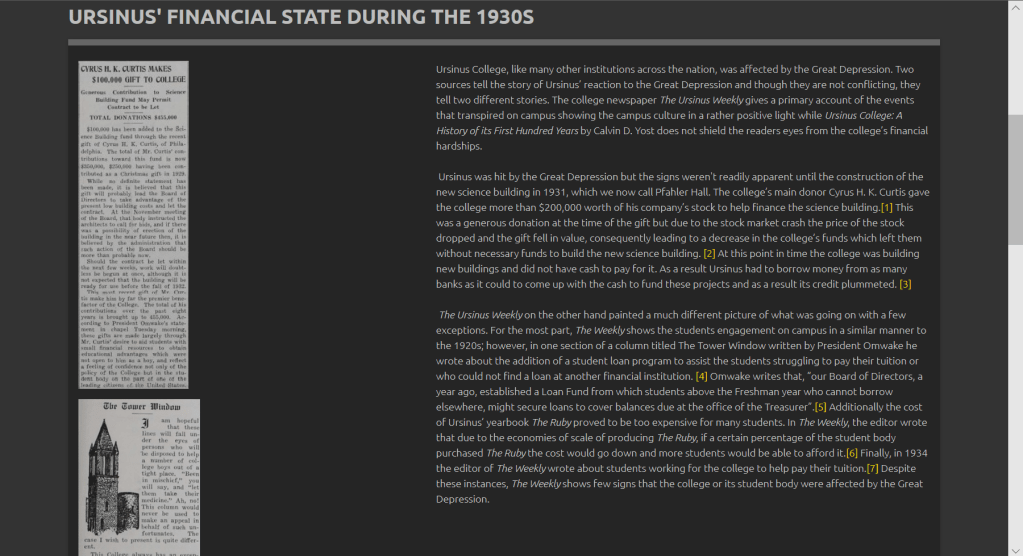
In terms of the main pages, which are featured above, the creators of the project did a really good job of collecting and showcasing the articles and pages they found for their analysis. Not only do they show an image of each of the documents, but each one is labeled for easy identification. Similarly, each page has a thoughtful analysis of the documents and connects them to the theme of the tab. The color of the page is not distracting in any way and the text is very easy to read.

Unfortunately, there are a few things that could be improved. For example, sometimes the spacing of the text and pictures is less than astatically pleasing. Some pages, like the “Politics on Campus During the 1920s” tab, have all of the text at the top and the pictures oddly spaced out on top of each other after that. Others, like the “Ursinus’ Financial State During the 1930s” tab, have the images extremely small and strangely placed to the side of the text. In addition, there is no conclusion tab, which makes the project feel slightly unfinished. Although each page has a very nice analysis, it would be helpful to have a final, all-encompassing conclusion to the project.

Overall, No More Blue Skies is a very well done project. The authors provided many images and thoughtful analyses of the sources they had pulled. In addition, it seems like the topic was well researched and is extremely organized. Like all projects, there were some issues. Specifically, the layout of some of the main pages were less than ideal and the project lacked a final conclusion. However, even though the project is not perfect, it is still very accessible and very well done.

To learn more about the “No More Blue Skies” project, please visit: http://omeka.ursinus.edu/exhibits/show/the-roaring-twenties-and-the-g

To learn more about Bears Make History, please visit: https://www.ursinus.edu/academics/history/bears-make-history/

Remembering the Emotional Moments

On a broad-scale, it is easy to see how the events of World War II changed culture and social life in nearly every country around the world. However, most people do not think about the small-scale, more personal impacts of the Second World War on local communities. It is essential to understand that the War impacted rather small groups, like that of Ursinus College, just as intensely as it impacted the world on a large scale.

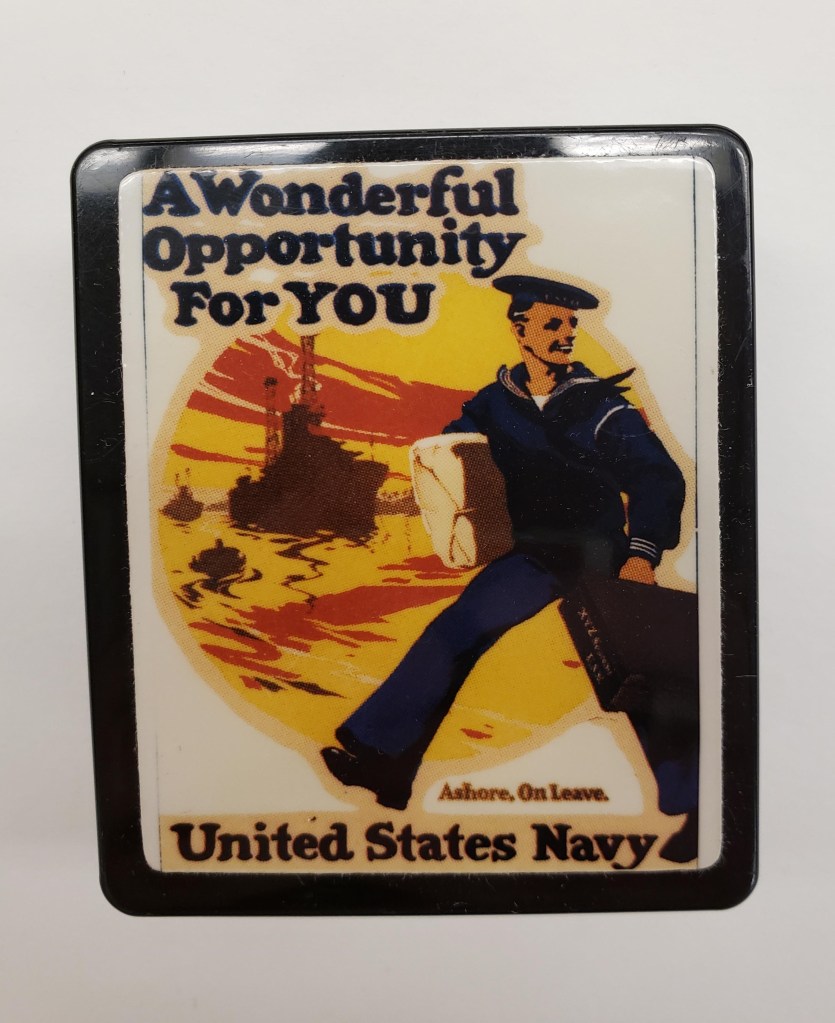
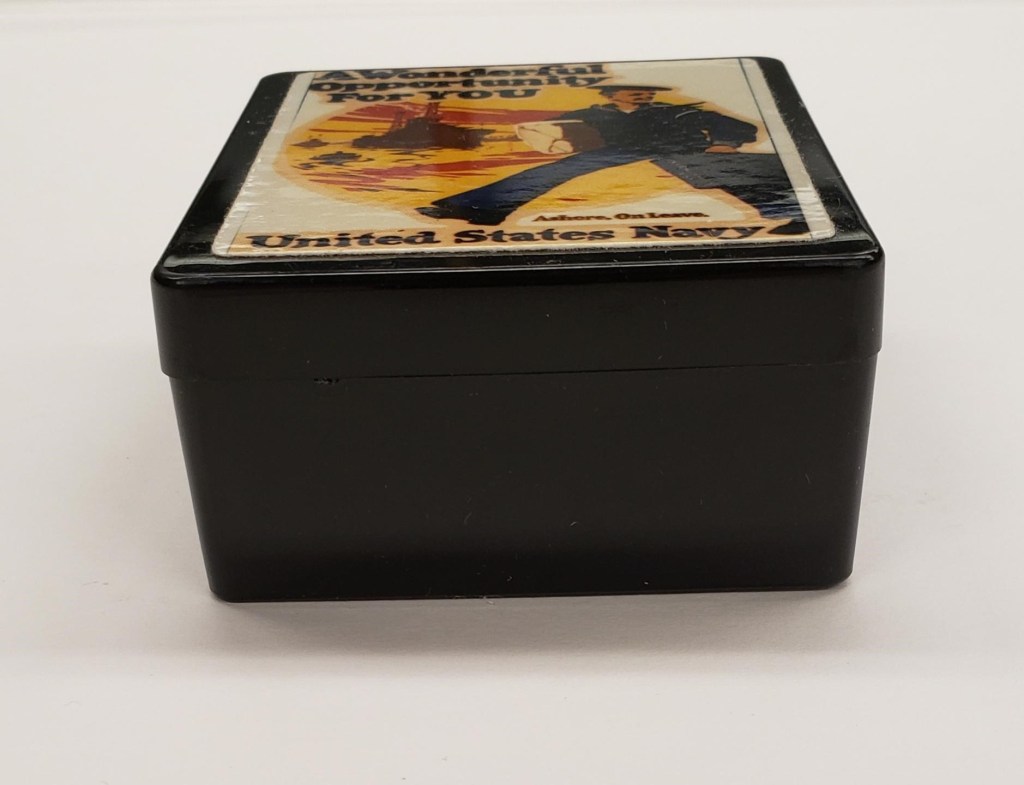
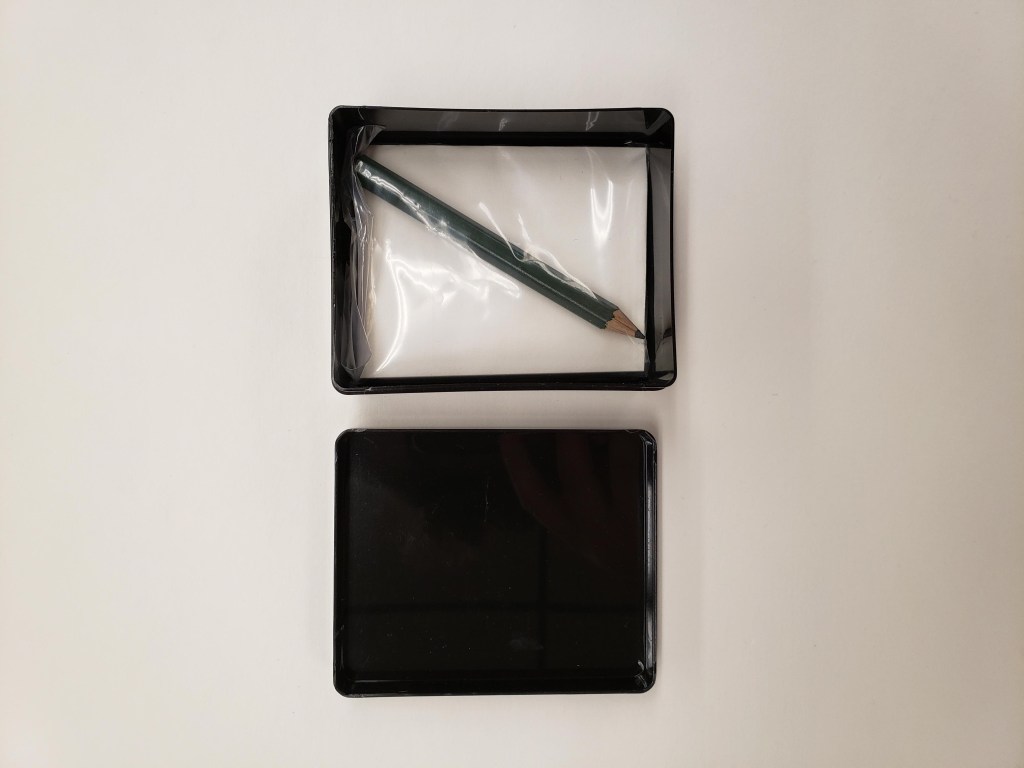
When I first started going to the Ursinus archives, I decided that I wanted to look into the small-scale, cultural impact of the Second World War on the campus community. Instead of a simple collection of documents and newspaper clippings, I was pleasantly surprised by the shear amount of war-related object in the archive. The one item that stuck out to me the most was a small plastic box with a photo of a sailor on top and some paper and a pencil inside. I was immediately intrigued and knew that I needed to learn more about the unique container.

When I first saw the box, I was slightly confused. Since when did the Navy hand out war propaganda in the form of a cute little plastic box? Upon talking to the archivist, Ms. Carolyn Weigel, I found out that this box was not created in direct relation to the war effort, but instead was produced in 1991 as a souvenir from the War Years Reunion. Apparently, the class of 1991 orchestrated a reunion to honor the young Ursinus men and women who joined the United States military during World War II.

The fact that such a box was created as a way to remember those who fought in the War showcases the profound impact that World War II had on the Ursinus community. Not only were the students of the time impacted, as shown by the plethora of newspaper articles and personal accounts regarding the War, but it seems that the students of 1991 were still feeling the lasting impacts of the event. After all, they made an effort to create a reunion for World War II veterans and make this special gift for people to keep in order to remember the event and the War. If the Second World War did not have a profound impact on the campus community, such a box, not to mention such an event, would never have been thought of.

This box stands as a symbol of how the Ursinus community, then and now, was forever changed by the events of World War II. By taking the time to design and create such a box, not to mention the event in which the box was distributed, it is clear that the War was still on people’s minds even decades in the future. I hope that this box will be a jumping off point for further exploration of the impact of World War II on the Ursinus community, then and now. There is still a great deal to uncover.

To learn more about this objects or others like it, please visit the following website: https://www.ursinus.edu/library/ursinusiana/

It’s a Start: Equity and Inclusion in the Digital Realm

Photo by Canva Studio on Pexels.com

Throughout the course of human existence, there have been many cases of inequity and exclusion. One needs only to look at who could vote before 1919 in the United States or who was considered a human being in America in the 1700s to see that equity and inclusion have not always been the norm. Given this idea, it should come as no surprise that libraries and archives mirror the shortfalls of the society in which they were created (Bourg 457).

Some researchers, like Chris Bourg with his article “The Library is Never Neutral,” are fully aware that libraries and archives have some serious issues. Bourg points out that the way in which libraries and archives are organized can lead to an unfair hierarchy of available and accessible information (458). For example, when I was in the library looking for a few books on the Black Death, I noticed that the books were split up into different sections. One book was listed under “Diseases,” another was in “Family History,” another in “Women’s History,” and yet another in “Medieval History.” The problem with this set up is that if someone was looking for books on the Black Death and only went to the “Diseases” section, they would only get one book and one perspective. In this way, many authors writing about the Black Death would not be included in the person’s research and their works would be seen as lesser in comparison to the work in the “Diseases” section.

Photo by Pixabay on Pexels.com

This scenario of inequity and exclusion can, in part, be rectified by becoming digital. In other words, when libraries and archives branch out into the digital world, they are able to shed some of their physical hierarchy. Bourg points out that digital access provides the opportunity for information to be connected to multiple categories, thereby reducing the exclusion and ranked importance of information (460). For example, the reason I was able to find out that the books on the Black Death were in different sections is because I first looked up the books on the library’s website. By doing so, I was presented with a wide range of books and articles related to the Black Death that would traditionally be split up into different categories and be difficult to find.

However, this does not mean that the digitalization of libraries and archives completely does away with inequity and exclusion. For starters, it is still very difficult to find out where all of the information on a given subject is because there are so many potential key words. I conducted about 20 searches using various key word combinations until I was able to find my books, which means that some works are still exclude from categories. Similarly, algorithms dictate what information is seen first when doing searches. Like with Google searches, my library searches were being filtered so that I got the “most relevant information” first, which means that some works were still given priority over others.

It should be noted that I have not listed all the ways in which the digital overcomes inequity and exclusion, nor have I covered all of the remaining issues. Instead, I have taken a closer look into how the success and failures of increasing equity and inclusion in the digital realm have impacted my research. This case study is meant to showcase the idea that the digital has made information much more available and equitable, but that it is far from perfect. I hope that by pointing out the shortcomings we will be able to make the digital a more open and representative place in the future.

To learn more about Chris Bourg’s article, please visit: https://punctumbooks.com/titles/disrupting-the-digital-humanities/

Or see the citation below.

Bourg, Chris. “The Library is Never Neutral.” In Disrupting the Digital Humanities, edited by Dorothy Kim and Jesse Stommel, 456-73. Brooklyn, NY: Punctum Books, 2018.

HIS-tory of High School

Photo by Pixabay on Pexels.com

Imagine, for a moment, that you are a hopeful high school student walking into your 6th period United States history course. As you sit at your desk and pull out your notebook, you take a moment to look at the posters that are on the walls of the classroom. Some feature documents, like the Declaration of Independence, while others showcase major historical figures like George Washington, FDR, and Ulysses S. Grant. The more you look, the more you realize that the posters only capture one kind of person: white males. As you ponder over the apparent one-sidedness of the classroom images, you come to a shocking realization: your lessons are just as one-sided as the posters. You sit in a classroom that is designed to retell HIS-tory.

This scenario is a slightly overexaggerated version of most people’s first encounter with the study of history. While some United States history classes may have a few posters of Rosie the Riveter and discuss historical figures like MLK, the vast majority of the lessons and images highlighted in the classroom feature the achievements and innovations of white males. Anyone who does not fit into this mold is virtually silenced.

Why do we rarely discuss the way in which Native Americans impacted and were impacted by the United States government outside of the Trail of Tears? Why do women seem to have a story only when teacher’s discuss the Woman’s Rights Movement or in close relation to their husbands? Why do people of any color other than white only get an honorable mention when it’s time to talk about slavery, segregation, and the Civil Rights Movement? Are these people only relevant to the history of our country at certain times? Are they merely side attractions in the real story of “valiant” white males?

I think not. What I do think is that many educators have been wrongly conditioned to believe that only white males have had sway over the development of our nation. This idea stems from the fact that the majority of people that have been publicised for their achievements are white men, which means that it is easier to gain sources and analyses of them. With this incomplete information comes the silencing of the people who do not fit into this traditional masculine and Caucasian form.

The main issue with these silences is that they exemplify gaps that prevent students from understanding the true nature of the past. They make it seem like the United States was only built through the work of white men and that anyone else was merely a side thought that only becomes important in light of certain historical events. In other words, our history begins to resemble separate groups only interacting at key points instead of a mix of people from all different groups that are constantly interacting with one another.

What can be done to give a voice to those that are silenced in the primary study of history? Increasing accessibility. As stated before, many educators, who are constantly overwhelmed by state standers, standardized testing, student diversity, parent questions, pressure to build an inclusive classroom environment, the desire to cover as much as possible, and create a worth-while education for all, are often on a time crunch and are looking for information that is easily accessible and can be analyzed effectively. Now, this is not to say that they are lazy, but instead to promote the idea that teachers are on a serious time crunch.

With this fact in mind, it is easy to see how teachers might become stuck repeating the same story of “American Advancement.” In order to combat this problem, make student’s first encounter with the study of history more accurate, and give a voice to the people who have been silenced for so long, the missing information needs to be more accessible. This means that educators that have already collected information on silenced groups need to share what they know with the wider community. Likewise, textbook authors need to make more of an effort to capture all sides of history; not just the convenient parts.

By making this information more accessible, teachers will have an easier time of integrating the more complete story into their daily lessons. In doing so, they will make sure to give a voice to those who have been silenced and allow students who are studying history for the first time to have a more inclusive picture of the past. By doing so, educators will be able to overcome the HIS-story that is often present in the study of the past.

Institutional Value-Making

Photo by Pixabay on Pexels.com

Many students in secondary education today would most likely say that they are independent thinkers that are free to make decisions on issues of race and equity as they see fit. However, is that really a true statement? According to the article, “I Am a Man” by William Hart, these young academics are far from correct. In fact, Hart makes the claim that secondary institutions have the power to shape students’ perspectives on race and equity so that they fit with the institution’s values and principles.

Hart’s article mainly focuses on the life of Martin Henry Freeman, who was a free African American man that argued in favor of the colonization movement. This movement is described on page 151 as focusing on moving free people of African descent from the United States to Liberia to form their own colony. While some slaves and free men supported this movement freely, Hart argues that others, like Freeman, were conditioned by their institutions to support the colonization movement. On page 172, Hart states that Freeman’s college, Middlebury College, was so supportive of the colonization movement and so interconnected with the Colonization Society that Freeman would have been told everyday that the only place that he would ever find true freedom and justice would be in Liberia. This conditioning, according to Hart, is what turned Freeman into one of the biggest supporters of colonization.

Is it true that secondary institutions have the power to change the way students think about race and equity? It is very possible. Many students in colleges or universities live on campus and are surrounded by their institution’s mottos, values, and ideals 24/7. In some ways, this constant exposer to a particular way of thinking could lead students to adopt the school’s widely circulated mantras. If those mantras are imbedded in prejudice and elitism, it is not unreasonable to believe that some students might take on a sense of superiority over others in their everyday life. In this sense, institutions could be the foundation for a kind of brainwashing of the student population.

However, the argument can also be made that this concept is rather extreme. While many students are exposed to forms of institutional propaganda, Hart fails to take into consideration the role that parents and the outside community have on shaping the values of students in secondary education. In addition, he leaves out the influence of primary schools, extracurricular activities, friends, coworkers, etc. After all, no student is born and raised at a university. Therefore, while institutions play a major role in deciding what students are exposed to while on campus, researchers cannot overlook the impact of the outside world.

Overall, secondary institutions do play a major role in deciding which values and ways of thinking are exposed to their students every day. However, it is unlikely that these institutions have the ability to shape the way every student sees the world, especially in terms of race and equity. Primary schools, extracurricular actives, workplaces, family, and friends also have a huge impact on the way in which students navigate issues of racism and fairness. Institutions may be important to the development of all students, but they are far from being the key to understanding how student’s view the world around them.

To learn more about Hart’s work, please visit:

Hart, William B. “I Am a Man.” In Slavery and the University: Histories and Legacies, edited by Leslie M. Harris, James T. Campbell, and Alfred L. Brophy, 148-178. Athens, Georgia: University of Georgia Press, 2019.

Always Looking on the Bright Side of History

Just about anyone who has had a childhood hero understands the desire to only look at the positive qualities of that hero, not their negative ones. However, as people grow up, many begin to address their heroes’ shortcomings and realize that everyone has flaws and weaknesses. How the hero deals with and, in some cases, overcomes their negative attributes is what makes them human and all the more worth looking up to. If everyday people come to this qualifying realization about their childhood idols, why can’t some historians do the same when writing articles?

What I am referring to is the way in which some historians present only the positive, heroic history of a person, government, ruler, or organization they deem to be worthy of praise. For example, Norman Jones’s article “The Continuous Death and Reresection of the Liberal Arts,” discusses the long journey of liberal arts institutions, all of which have had major ups and downs throughout the years. Interestingly enough, Jones attributes the staying power of these institutions to the hard work and dedication of the AACU, or the Association of American Colleges and Universities. Throughout the article, Jones showcases the main achievements and helpful nature of the AACU without ever saying one bad word about them.

https://www.ewa.org/press-release/aacu-announces-five-year-strategic-plan-reclaim-higher-educations-civic-mission

Could it be possible that the AACU has never made any mistakes and thus has no flaws? Definitely not. Even the seemingly invincible Superman has his shortcomings. What seems to be more probable is that Jones, who is a senior fellow of the organization, wanted to promote a golden image of the AACU for its one hundredth anniversary. Instead of admitting the organization’s shortcomings and possibly providing information that would destroy his argument about the influence the AACU had on the liberal arts, Jones decided to tell a more simplified version of the past where his desired hero reigned supreme.

Do other historians do this? Sometimes. Throughout history, historians have had some kind of objective in their writing, whether that be to describe the rule of a particular king or the nationalist history of a country. That is to say, some historians do write to make one side, person, or organization look good. The way in which they accomplish this task is by leaving out information, just like Jones did. Other historians try to produce more neutral interpretations of the past, but since bias is inherent in every person, it is difficult to accomplish. In that sense, nearly every historical work is going to make one side seem better or more important than it actually is even if the historian is trying hard to prevent that every occurrence from happening.

In that case, is history a lost cause? Absolutely not. Every person, whether they are a child looking up to their hero or a historian writing about liberal arts, automatically has some bias associated with how they see evidence and the world around them. Therefore, every piece of history is going to be swayed in one direction or another. However, that does not mean that history is useless. All this unavoidable factor means is that people cannot rely on a single source to get the truth about a person, organization, or event. Sources much be compared with one another, critiqued, and evaluated to the highest extent. In doing so, people will be able to see a more complete picture of the person or event they are trying to study.

Just as children have a hard time coming to terms with the flaws of their idols, historians often have issues with presenting the past in its entirety. Some authors, like Norman Jones, are more obvious about their biases than others and end up creating one-sided historical accounts. Even so, that does not mean that the accounts are meaningless. Maybe the AACU did have a major impact on the staying power of liberal arts institutions. Maybe they did not. The important idea to remember is that people cannot rely on one account alone to reconstruct the past. Sources must be compared, critiqued, and analysed in order to draw out the full meaning, and beauty, of the past.

To learn more about Norman Jones’s work, please visit the following link:

https://www.aacu.org/liberaleducation/2015-2016/fall-winter/jones

Institutional Image

Why exactly are some institutions viewed in an extremely positive light while others are viewed negatively? As discussed in HIST 212, one of the main factors that contribute to this disparity is the kind of historical sources that are used to provide background for the particular institution. Whether those sources are kept in a private archive, available to the public, or only available in a particular country, they play a large role in shaping what people think about specific companies and establishments. For example, the article Corporate Image and the Establishment of Euro Disney: Mickey Mouse and the French Press by Janis Forman talks specifically about how sources created by the French press painted a very different, more negative picture of Disney than the ones created by the American press.

Forman’s article focuses on Disney’s 1992 attempt to establish a theme park in France and the social and cultural problems that were created while trying to meet this goal. Throughout the article, she addresses the ways in which the French and American reporters covered the move, like on page 250 where she states that both groups of reporters addressed the fact that Disney was making minor efforts to combine French and American culture throughout the park. One of the largest disparities that Forman notes is on pages 252 and 253 where she talks about the problems associated with Disney’s employee dress code and behavioral policy. On page 252 she states, “Whereas the American press noted the conflict between the company’s and French job candidates’ assumptions about appropriate dress and manner, the French press described in detail people’s outrage at Disney’s requirements.” In other words, the American press made the cultural clash over attire and demeanor seem small and insignificant whereas the French press noted how important this clash was both to the employees and wider community. Forman goes on to talk on page 253 about how the press reports made the French people see Disney as a greedy, cultural imperialist, while the American people retained a positive outlook of the organization.

So how exactly do these newspaper articles relate to archives and how institutions are viewed by the public? As discussed in class, archives are essentially a collection of sources that typically deal with a specific historical topic, like the history of Disney’s French theme park. In this sense, the newspaper articles about Disney’s time in France serve as sources for the archive on Disney’s French history, but there is a catch: the English and French sources are filed differently. More specifically, the English press releases go into the American archive and the French press releases go into the French one. Since Forman suggests that the English reporters had a more favorable interpretation of Disney in 1992, it is clear that the American archives are more likely to have mostly positive sources that make Disney seem great, while the French archives probably have a more cynical outlook on the park. For historians, this act of splitting up the information makes it hard to get a fully accurate account of Disney’s time in France because most people would not have the information in both archives.

In addition, since Disney is a United States-based company, people studying the organization’s past may have an easier time accessing the more positive, American-centered sources as opposed to the more negative, French-based ones. The lopsided availability of information could lead to more people thinking highly of Disney and never really knowing about the more negative side of the story. In contrast, scholars researching Disney in the French archives will undoubtedly only see the company in a negative light because, as Forman states on pages 255 and 256, none of the French sources mention the positive impact of Disney’s park on the French people. This act of splitting up information is similar to the way in which many institutions set up their own archives. The only difference is that instead of having American and French archives, they only have an American one. To put it another way, the institution may edit what kinds of historical sources that get placed into the archive so that the organization appears to be more trustworthy and respectable than it really is. If archives have not been edited, there is a possibility that unfavorable information may be recorded, yet kept slightly out of sight from future researchers.

As historians, it is important to keep these ideas in mind while doing research on institutions. Not all archives are built to capture the whole truth, but instead to focus on a specific part of the institution’s past. If the archive does contain the whole truth, it may take a great deal of digging to fully understand the pros and cons of the organization’s past. While there is little researchers today can do about the information that was saved in the past, they can still do a great deal with the information they have available to them. In the same way that Janis Forman reconstructed a more complete history of Disney’s time in France, historians working in institutional archives today will also be able to construct a more accurate representation of their organization’s past. While the availability of sources in archives may sway a historian to form a particular viewpoint, they can often gain a more representative view of their subject by getting more creative with their research methods.

To learn more about Forman’s article, please check out the following information and included link. Warning: Membership may be required to access this article.

Forman, Janis. “Corporate Image and the Establishment of Euro Disney: Mickey Mouse and the French Press.” Technical Communication Quarterly 7, no. 3 (1998): 247-58. doi:10.1080/10572259809364629. https://ursinuscollege.on.worldcat.org/oclc/4893953708

Design a site like this with WordPress.com
Get started