
Throughout the course of human existence, there have been many cases of inequity and exclusion. One needs only to look at who could vote before 1919 in the United States or who was considered a human being in America in the 1700s to see that equity and inclusion have not always been the norm. Given this idea, it should come as no surprise that libraries and archives mirror the shortfalls of the society in which they were created (Bourg 457).
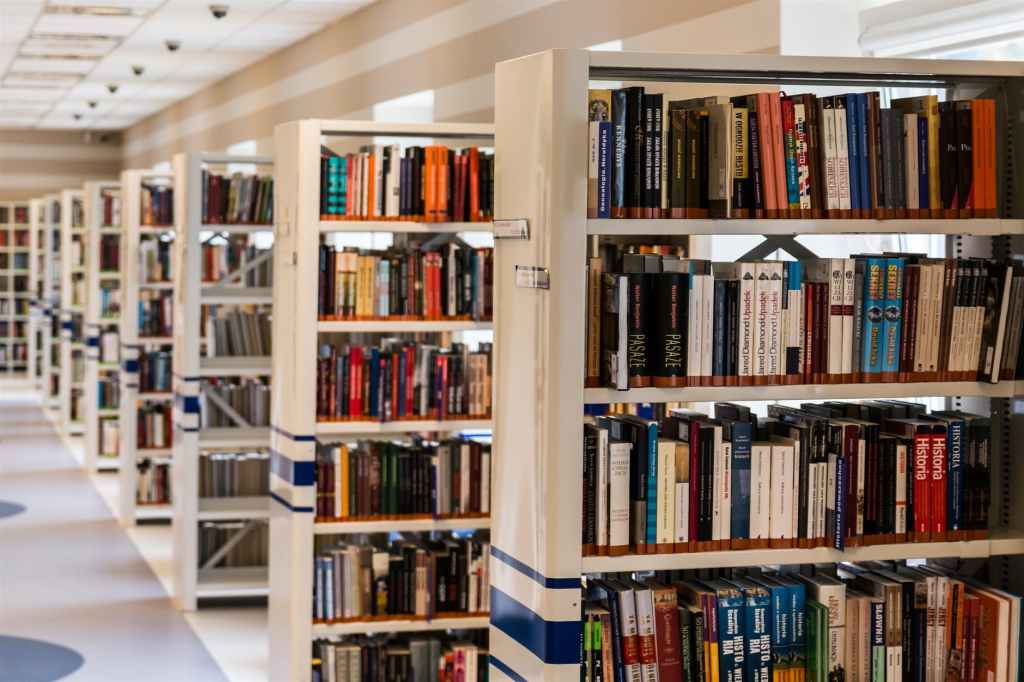
Some researchers, like Chris Bourg with his article “The Library is Never Neutral,” are fully aware that libraries and archives have some serious issues. Bourg points out that the way in which libraries and archives are organized can lead to an unfair hierarchy of available and accessible information (458). For example, when I was in the library looking for a few books on the Black Death, I noticed that the books were split up into different sections. One book was listed under “Diseases,” another was in “Family History,” another in “Women’s History,” and yet another in “Medieval History.” The problem with this set up is that if someone was looking for books on the Black Death and only went to the “Diseases” section, they would only get one book and one perspective. In this way, many authors writing about the Black Death would not be included in the person’s research and their works would be seen as lesser in comparison to the work in the “Diseases” section.
This scenario of inequity and exclusion can, in part, be rectified by becoming digital. In other words, when libraries and archives branch out into the digital world, they are able to shed some of their physical hierarchy. Bourg points out that digital access provides the opportunity for information to be connected to multiple categories, thereby reducing the exclusion and ranked importance of information (460). For example, the reason I was able to find out that the books on the Black Death were in different sections is because I first looked up the books on the library’s website. By doing so, I was presented with a wide range of books and articles related to the Black Death that would traditionally be split up into different categories and be difficult to find.
However, this does not mean that the digitalization of libraries and archives completely does away with inequity and exclusion. For starters, it is still very difficult to find out where all of the information on a given subject is because there are so many potential key words. I conducted about 20 searches using various key word combinations until I was able to find my books, which means that some works are still exclude from categories. Similarly, algorithms dictate what information is seen first when doing searches. Like with Google searches, my library searches were being filtered so that I got the “most relevant information” first, which means that some works were still given priority over others.
It should be noted that I have not listed all the ways in which the digital overcomes inequity and exclusion, nor have I covered all of the remaining issues. Instead, I have taken a closer look into how the success and failures of increasing equity and inclusion in the digital realm have impacted my research. This case study is meant to showcase the idea that the digital has made information much more available and equitable, but that it is far from perfect. I hope that by pointing out the shortcomings we will be able to make the digital a more open and representative place in the future.
To learn more about Chris Bourg’s article, please visit: https://punctumbooks.com/titles/disrupting-the-digital-humanities/
Or see the citation below.
Bourg, Chris. “The Library is Never Neutral.” In Disrupting the Digital Humanities, edited by Dorothy Kim and Jesse Stommel, 456-73. Brooklyn, NY: Punctum Books, 2018.
 Bears Make History: Tale By Morgana O.